




Visiting Scotland
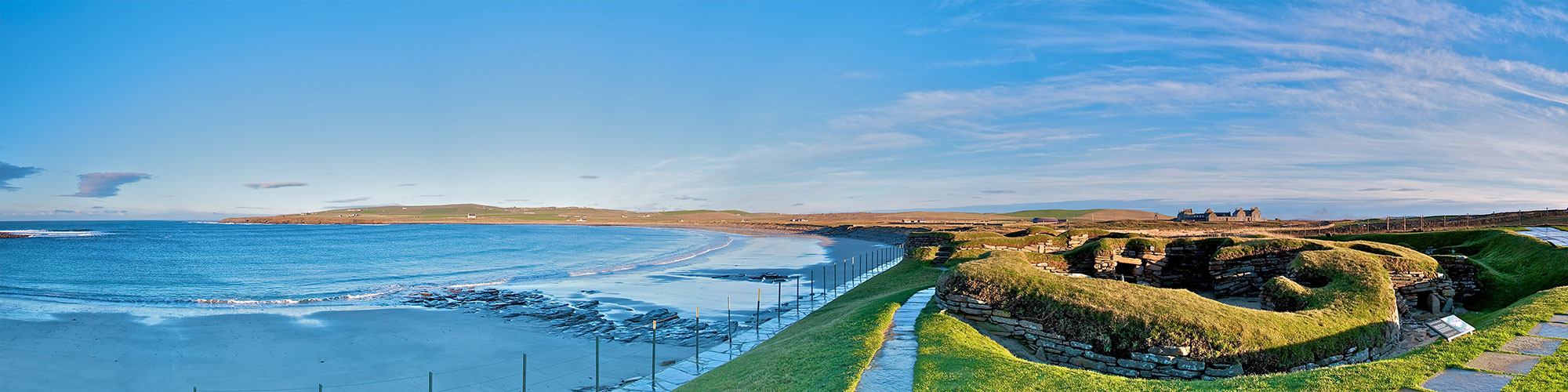
Scotland is a very popular tourist destination – with over 2.2 million international visits in 2022. Tourism and events are a mainstay of the Scottish economy. Many are drawn by the stunning scenery of mountains, lochs, and spectacular coastline. And then there are the castles, ancient archaeological sites, and settlements reaching back to Neolithic times.
Add to that the opportunities to play on famous courses – Scotland is the home of golf – or add a visit to one of the hundreds of distilleries to sample the national drink – whisky – and you can see why visitors keep returning. Scotland’s museums and galleries host internationally renowned collections.
Then there is one of the world’s biggest cultural events – the Edinburgh Festival and Fringe. Our dates for the 38th IGC coincide with this and Edinburgh is less than an hour’s train ride from Glasgow. If this sounds too frantic, why not take in Glasgow’s live music scene. Many of its numerous pubs host informal sessions, focusing especially on folk music.
Geographically, mainland Scotland divides into three broad areas. In the north are the Highlands, with low population densities and fantastic wild scenery. As the name suggest, this is where the highest mountains are to be found. The Highlands begin just north of Glasgow. The other high ground of Scotland lies to the south, running to the border with England. These are the Southern Uplands, with rolling hills, the highest point of which is The Merrick (843 m). Again, the region is sparsely populated and concentrated in towns. Between the upland regions lies Scotland’s central belt, home to the majority of the population and almost all its major cities. This is a compact region, Edinburgh, the capital, and Glasgow, on opposite coasts, are just 67 km apart.
Some statistics:
- Scotland’s land area: almost 78,000 km2 (32% of the UK as a whole).
- Scotland has at least 790 islands and a coastline of 18,743 km (as judged by Marine Scotland).
- Scotland’s highest peak is Ben Nevis (Beinn Nibheis) – at 1345 m its summit is the highest point in the British Isles. As such, it is the highest Munro, designated peaks each with a height over 3,000 feet or 914.4 m. There are 282 Munros across Scotland.
- Scotland’s climate is temperate. Although the highest temperature recorded in Glasgow was 31.9 °C (July 2018), in August, the average high-temperature is a pleasant 16.2 °C.
The nation of Scotland became constitutionally part of the United Kingdom through the Treaty of Union in 1707. Although Scotland remains constitutionally part of the UK, swathes of the country’s legislation have passed to the Scottish Government following the Scotland Act in 1999. The Scottish Government is led by the First Minister, with devolved powers in the economy, science, education, health, housing, justice and transport.
- Scotland has 19 universities. In 2021-22, they hosted over 300,000 students (82,000 were international).
- Scotland’s population: 5,436,600 (as of the 2022 census), with a median age of 42.2.
- Glasgow is Scotland’s most populous city: 632,350 (as of the 2022 census).